Strategy
Political, economic, social, technological, legal and environmental factors
Works on the Free plan: 15 diagram nodes + 150 notes, text, stickers & mind map topics per diagram.
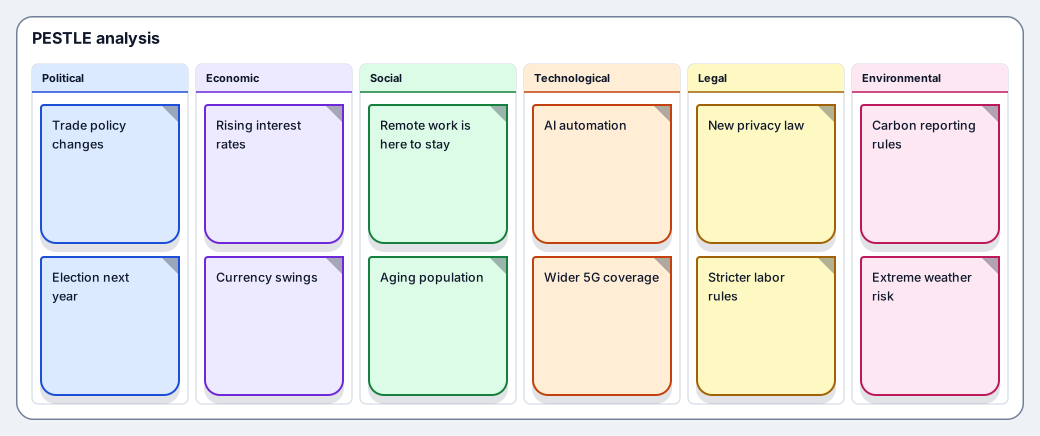
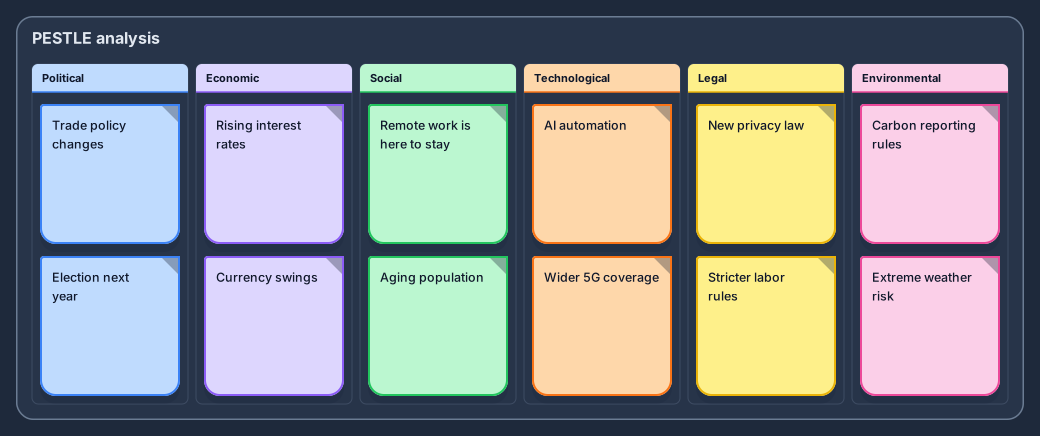
A PESTLE analysis scans the world around a plan for six kinds of change: political, economic, social, technological, legal, and environmental. This template opens a board with one column for each factor and two sample notes per column, from trade policy changes to carbon reporting rules.
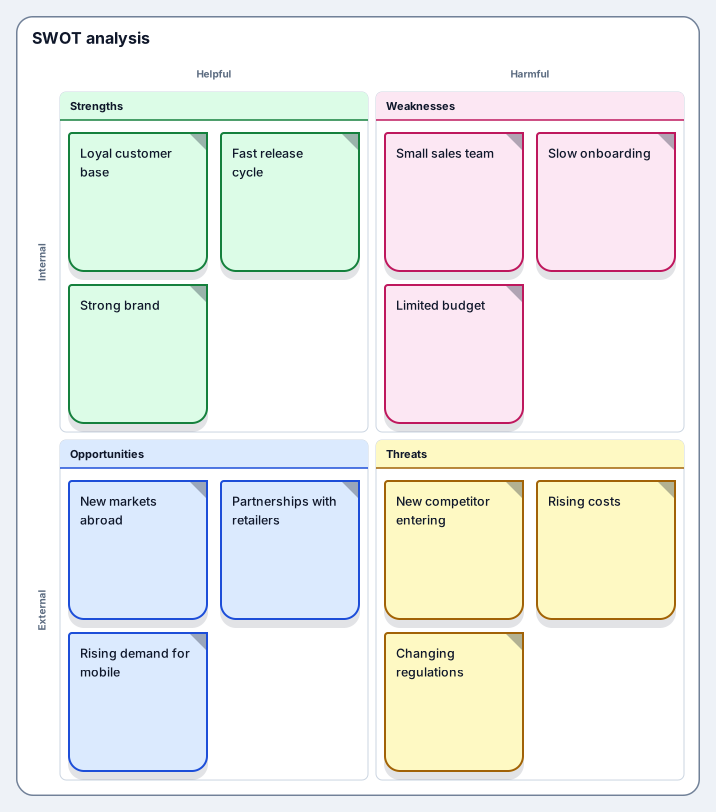
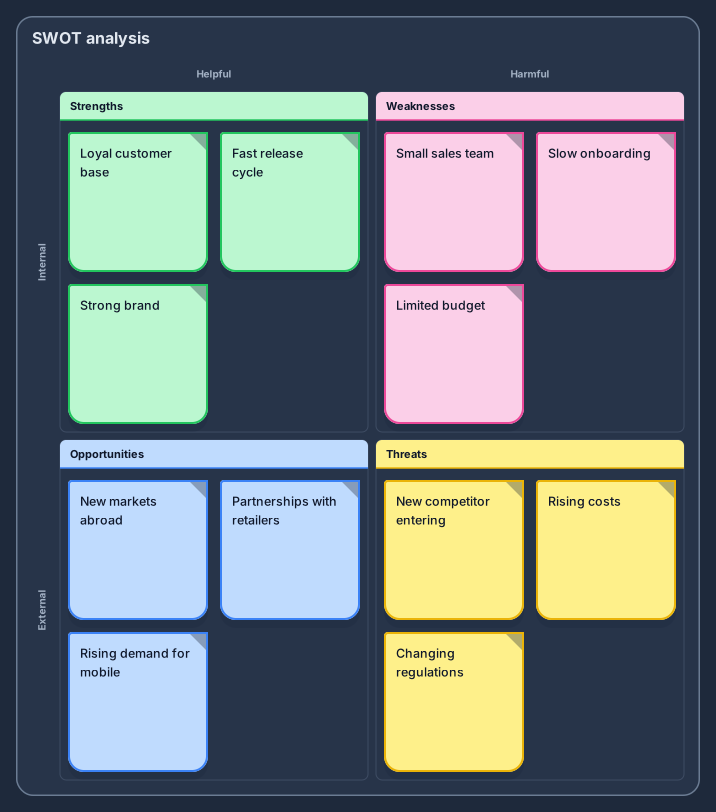
The columns keep the six lenses apart, so the group does not drift into debating one factor while ignoring the rest. Add as many notes as you find, move a note when a factor turns out to be legal rather than political, and the board grows to keep everything readable. The result feeds directly into the opportunities and threats of a SWOT analysis on the same canvas.
Write the decision or market you are analysing in the board title.
Replace the sample notes with factors that really affect that decision, one per note, in the right column.
Mark the factors with the biggest likely impact, and move weaker ones aside instead of deleting them.
Carry the most important factors into a SWOT analysis or a risk matrix, and share the board with your team.
PEST covers political, economic, social, and technological factors. PESTLE adds legal and environmental factors, which matter for most products today; a column can stay sparse when it does not apply.
Revisit it whenever you plan a major decision, or at least once a year. Save a revision snapshot each time, so you can see which factors changed since the last review.
Related use case
SWOT analysisSign in with Google or GitHub. Free for a single seat. Upgrade when the team joins.